
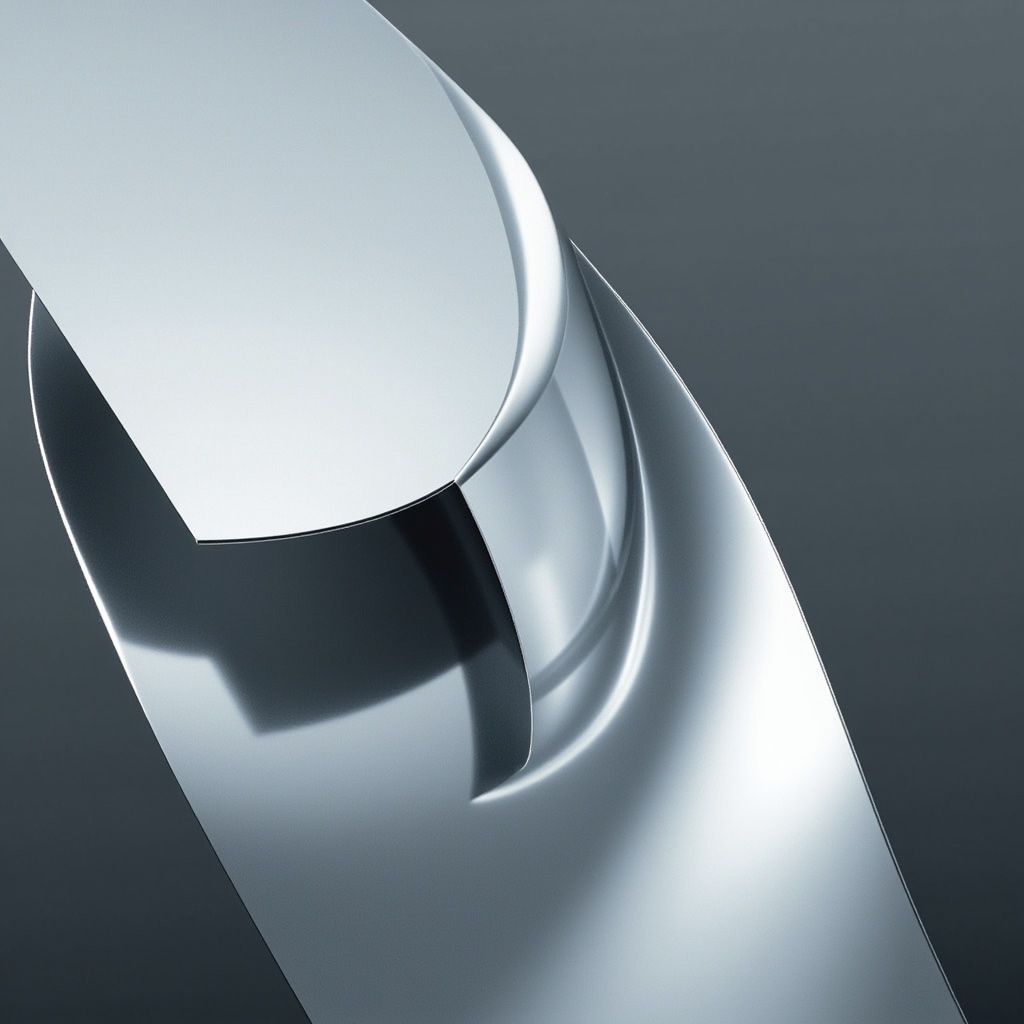
 The first time you see a perfectly seamless curved Aluminum Alloy Mirror Frame profile, you don’t notice the technique. You notice the reflection. The way light bends without distortion, the way a building’s facade suddenly feels fluid instead of rigid. That’s the magic of precision bending and forming—and it’s also the hardest part of the job.
Let’s cut through the noise. Curved aluminum mirror profiles aren’t just about aesthetics. They’re about engineering a surface that behaves like glass but weighs half as much, resists corrosion like a champ, and still delivers that mirror-finish pop. But if your bending technique is sloppy, the mirror effect dies. Distortion, micro-cracks, wavy reflections—these are the enemies.
Here’s the reality: standard bending methods crush the profile. They pinch the walls, stress the reflective coating, and leave you with a part that looks more funhouse mirror than architectural statement. That’s why we don’t use standard methods.
We use three core techniques that actually respect the material.
First, rotary draw bending with internal mandrel support. This isn’t new, but the execution matters. The mandrel slides inside the profile to prevent collapse, while the draw die rotates the material around a fixed radius. For mirror profiles, the trick is controlling the pressure against the reflective surface. Too much friction, and you’ll scuff the finish. We use a specialized polymer sleeve on the mandrel—non-marring, self-lubricating, and replaceable. The result? A bend radius as tight as 1.5 times the profile width, with zero surface damage.
Second, stretch forming for large-radius curves. If you’re working with spans over ten feet, conventional bending introduces springback that ruins alignment. Stretch forming solves this by pulling the profile into tension while wrapping it around a die. The tension eliminates residual stress, so the curve holds true. For mirror profiles, we apply a protective peel-away film before forming, then remove it after. The finish stays pristine. This technique is ideal for architectural cladding, lobby columns, and curved handrails where the reflection needs to be continuous.
Third, incremental roll bending for custom radii. Sometimes you don’t know the exact curve until you’re on site. Roll bending lets you adjust on the fly. Three rollers pinch the profile and gradually increase the curvature with each pass. The key is keeping the rollers polished and the feed speed consistent. We add a laser guide that tracks the profile’s angle in real time, so every pass is identical. No guesswork. No scrapped parts.
Here’s the advantage you can’t ignore: every one of these techniques preserves the anodized or painted mirror finish. We don’t post-polish after bending. That’s a trap—post-polishing removes material unevenly and ruins the optical clarity. Instead, we pre-treat the aluminum with a high-gloss anodizing process that bonds at the molecular level. Then we bend. The coating bends with the metal. It doesn’t flake, crack, or fog.
What does this mean for your project? It means you can spec a curved mirror profile that looks like a single continuous sheet of liquid metal. No seams, no distortion, no ugly stress marks. It means installation is faster because the profiles are dimensionally perfect. It means your client gets a reflection that actually reflects—not a wavy mess that screams “cheap.”
We’ve seen the alternatives. We’ve fixed the messes left by shops that treat mirror profiles like standard aluminum. Don’t let your project become a cautionary tale.
Curved aluminum mirror profiles are a statement. Make sure the technique behind them is just as sharp.